
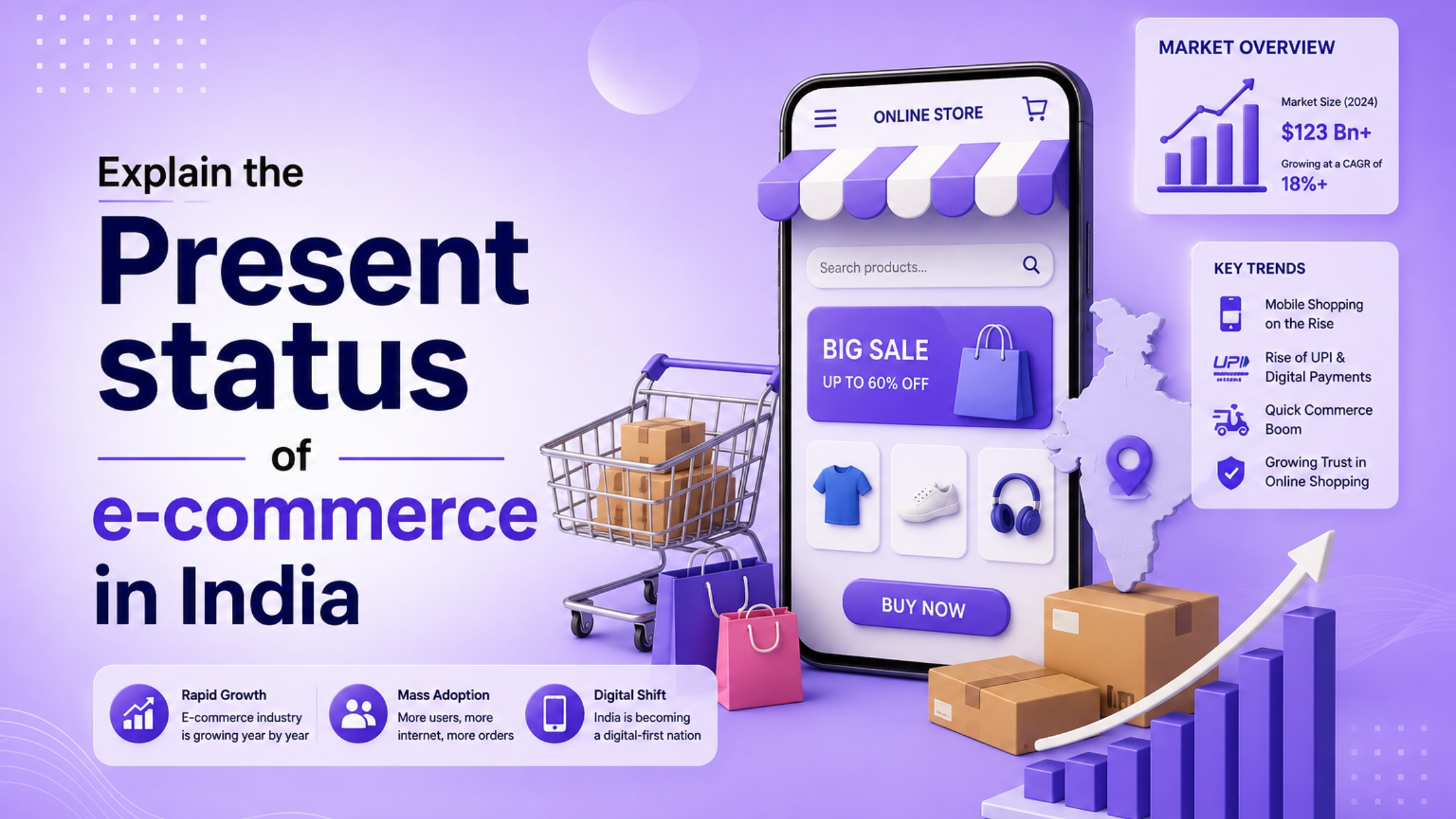
India’s e-commerce market has come a long way from just being a luxury of the urban population. The growth of e-commerce in India has now become one of the key determinants of retail business, consumer behavior, logistics, and digital payments in the country. Numerous sectors have witnessed the scope of e-commerce in india, including the fashion, electronics, healthcare, grocery delivery, and education sectors.
What distinguishes India’s e-commerce growth from other countries is its rapid pace. With the availability of affordable mobile phones, low-cost internet, and digital payment solutions, e-commerce has rapidly expanded even to small towns and semi-urban areas.
Current Growth of the Indian E-Commerce Market
The Indian e-commerce industry has seen tremendous growth over the past decade, with companies such as Flipkart, Amazon, and Meesho changing the way consumers make purchases.
1. Increase in Internet and Smartphone Users in India
India has one of the highest numbers of internet users globally. Due to affordable mobile plans and inexpensive smartphones, many Indians can now use the internet. Increased digital usage is continuously expanding the boundaries of e-commerce in India.
2. Expansion of UPI and Digital Payment Systems
The customers feel safe purchasing their goods or services online. While cash on delivery is an option, customers prefer digital transactions due to the ease of payment.
3. Increase in E-commerce in Small Cities
Previously, there were a few cities in India where e-commerce services could be seen growing, namely Delhi, Mumbai, Bangalore, and Hyderabad. These days, small cities are witnessing an influx of e-commerce services, which has resulted in a very wide scope of opportunities for business enterprises in e-commerce services in India.
4. Advancements in Logistic Services
There has been a trend towards consumers demanding fast delivery and next-day delivery, especially from urban regions.
Latest Trends in the Indian E-Commerce Industry
India’s e-commerce market is currently in a strong growth phase with multiple high-performing categories.
Top Growing E-Commerce Categories in India
- Fashion and apparel
- Consumer electronics
- Grocery delivery
- Health and wellness
- Beauty products
- Furniture and home decor
- Online education
- Travel bookings
- B2B commerce
Platforms like Blinkit, Zepto, and Swiggy are changing delivery expectations across India. This transformation further strengthens the growing scope of e-commerce in india across organized and unorganized sectors.
Also Read This Blog – How Artificial Intelligence (AI) Impacts Local SEO Services ?
Government Policies Driving E-Commerce Growth in India
Government intervention has been a significant factor driving the growth of digital commerce. The Digital India scheme, among others, has prompted enterprises to go digital. The rollout of the GST system has made interstate sales easier for many firms, enabling them to reach customers across India.
The digital infrastructure of India has emerged as a key strength for online retailing in the country. Good mobile networks and digital payments have lowered obstacles for both customers and businesses.
The other notable trend is the launch of ONDC, which seeks to build a more open digital commerce platform, allowing small sellers to compete on equal terms with giant marketplaces.
Major Challenges Faced by the E-Commerce Industry in India
Even with this impressive rate of growth, the Indian e-commerce sector continues to face a number of problems.
1. Problems in Rural Deliveries and Logistics
Although urban deliveries have become much easier, there are still some difficulties associated with rural deliveries and logistics. Infrastructure and delivery times may not always be consistent.
2. Rising Competition in the Market
There has been an increased level of competition in the market. The competition is high due to thousands of businesses vying for customers.
3. Customer Concerns
Fraud cases and counterfeit goods are issues that have continued to affect many e-commerce businesses. Companies that are able to maintain customer trust by delivering products of high quality and integrity will attract loyal customers in the long run.
4. Issues regarding Cybersecurity
With the rise in online transactions, issues regarding the safety and security of personal information have started to surface. For this reason, most e-commerce firms need to invest in good cybersecurity features.
Top Business Opportunities in the Indian E-Commerce Industry
The current market offers massive opportunities for startups, retailers, and manufacturers.
- Direct to consumer brands
- Regional language commerce
- Sustainable and eco friendly products
- AI based personalized shopping
- Subscription commerce models
- Niche product categories
Moreover, several companies are focusing on developing sophisticated websites and mobile applications to enhance their interactions and sales online. In most cases, brands partner with the Best e-commernce development agency to design an efficient platform for online business operations.
How Consumer Behavior is Changing in Indian E-Commerce
The future of ecommerce in india looks extremely promising. Digital adoption is still growing rapidly across the country, creating huge potential for long term expansion. Several trends are expected to shape the next phase of the industry.
1. Ecommerce and Artificial Intelligence
E-commerce is getting better owing to artificial intelligence technology as it offers customized product recommendations to shoppers.
2. Voice-based Search and Commerce Using Native Languages
Shopping using voice-based tools and commerce involving native languages is going to become more important. This trend would be more relevant in rural towns where people use the internet for the first time.
3. Rise of Quick Commerce Platforms
Shoppers are expecting quick delivery of goods to their doorstep, as far as grocery shopping is concerned. Quick commerce platforms will likely launch their operations in more cities soon.
4. Rise of DTC brands in India
DTC brands are emerging owing to improved cost control, strong branding and reduced dependence on middlemen.
5. Augmented Reality and Virtual Try-On Services
AR technology is enabling online shoppers to make informed buying decisions. All these trends show that ecommerce in India will see robust growth in the coming years.
Role of E-Commerce in India’s Digital Economy
E-commerce is not only transforming shopping habits but also contributing significantly to India’s economy.
Major Employment Opportunities Created by E-Commerce
- Warehousing
- Logistics and delivery
- Customer support
- Digital marketing
- Software development
- Packaging and supply chain management
Women entrepreneurs and small businesses are also benefiting from online marketplaces because they reduce many traditional business barriers.
The overall future of ecommerce in india will depend on how effectively businesses continue improving technology, customer trust, and operational efficiency.
Conclusion
India’s e-commerce industry is about to enter a new era of digital transformation. From being an innovative service to provide convenience in cities, this sector has now developed into a full-fledged economic activity that impacts many other industries, such as retail, IT, logistics, etc. It seems that the future of ecommerce in India will be exciting and highly integrated.
Frequently Asked Questions
AI in SEO automates keyword research, content planning, and rank tracking, helping businesses improve search visibility faster and more accurately.
AI in local SEO helps small businesses target nearby customers, track reviews, and compete with larger brands without heavy manual effort.
Yes. AI-driven SEO strategies process data faster, spot opportunities quicker, and deliver more accurate results compared to fully manual traditional SEO approaches.
Ask agencies how AI fits their workflow. A good SEO agency in India will clearly explain its AI tools and process. One such agency is NextBigBox.
No. AI handles data and automation, but human experts provide strategy, creativity, and judgment that no AI tool can fully replace.




Leave a Reply