
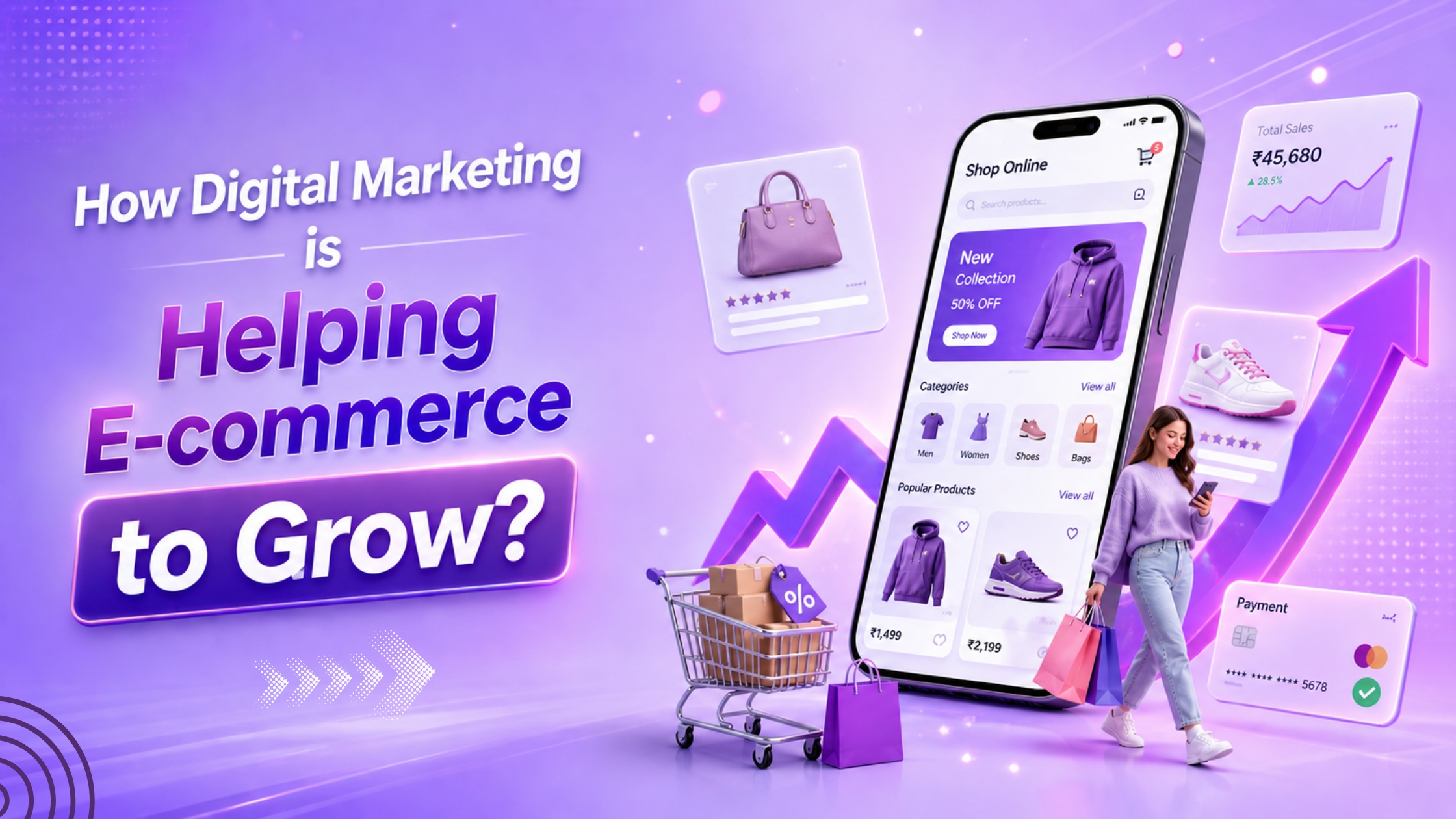
It is not just about selling online. Selling consistently is the main goal. There are more than a thousand online stores, and most of them struggle to get orders. It is not because their products are bad but because nobody finds their store online. But how are competitors gaining customers? It is because they use digital marketing for ecommerce in the right way. Reaching people at the right time when they search is the greatest achievement.
From building a website that holds everything together to the marketing channels that drive real buyer traffic, NextBigBox helps businesses grow without the guesswork. Read on to see what strategies are making the biggest impact right now.
What is Digital Marketing for E-commerce?
A complete set of online strategies to attract visitors, convert them into customers and bring them back again. This is known as digital marketing for ecommerce. It includes everything from how your store appears on Google to how you follow up with someone who added a product to their cart and leaves without buying.
It is not just one thing. Many things work together; each thing plays a specific role in the journey of the customer. And when that system is built well, it becomes the most reliable growth engine an online business can have.
Why Do E-commerce Businesses Need Digital Marketing?
Ten years ago, an online store was represented by a website and hoped that the search engines would notice it. This approach is no longer effective. People are searching for something every second. Taking attention is expensive. And customer expectations have increased significantly.
Competition in online businesses is no longer about price or the quality of products, but it is about visibility, confidence, and time. You must be present when somebody is searching for what you are selling; that is where Ecommerce Website Development comes in, and it must be easy to go back and make the purchase.
It is the businesses that invest in this in a proper manner who are pulling ahead. The ones that fail to are losing their ad spend without anything to reflect on it.
Top 5 Ecommerce Digital Marketing Strategies
Here are some e-commerce digital marketing strategies that have always worked when applied in a clear manner. Many businesses partner with a Digital Marketing Agency to implement these strategies effectively and achieve better results.
1. Search Engine Optimisation (SEO) – This remains one of the most profitable channels. By having your product pages and category pages ranking highly in Google, you can attract organic traffic without having to pay per click. This needs appropriate keyword research, clean site architecture and quality content, but the reward builds up in the long run.
2. Pay-Per-Click Advertising (PPC) – On such websites as Google and Meta, allows you to instantly appear before targeted audiences. Paid campaigns bring reliable, quantifiable revenue when your product pages are developed and your landing experience is robust. It is all about aligning the advertisement with the appropriate purpose at the appropriate time.
3. Email Marketing – This type of marketing is one of the least used tools. It is also one of the best Ecommerce Digital Marketing Strategies. Most stores rely on abandoned cart sequences, post-purchase flows and promotional campaigns to generate a large portion of repeat revenue. In contrast to social media, email is a personal line to your customer, which you have full ownership over.
4. Social Media Marketing – It creates brand awareness and makes the product discovered, particularly on such platforms as Instagram, Pinterest, and YouTube, where people actively look for products. Combining organic content and paid social campaigns will result in a two-pronged strategy that generates awareness and conversions.
5. Content Marketing – Blogs, guides, and comparison articles are a part of Content Marketing that allow you to rank on informational searches and become an authority in your niche. The buyer who has found your content helpful before he or she even exists on your product page has a higher chance of converting.
Which Digital Marketing Channel Works Best for E-commerce?
Here is a quick comparison of the most widely used online marketing approaches by their primary strengths:-
Strategy | Best For | Time to Results | Cost Model |
SEO | Long-term organic traffic | 3 to 6 months | Time and resource investment |
PPC Advertising | Immediate traffic and sales | Days | Pay per click |
Email Marketing | Retention and repeat sales | Weeks | Low, subscription-based |
Social Media Marketing | Brand discovery and engagement | Weeks to months | Time plus optional paid spend |
Content Marketing | Authority building and SEO | 3 to 6 months | Time and resource investment |
Influencer Marketing | Niche audience reach | Weeks | Flat fee or commission |
How Your E-commerce Website Impacts Your Marketing Results?
A great marketing strategy can only deliver results if the website behind it is built to handle them. Here is what that means in practice:-
1. Fast Load Speed – Slow pages waste time and they make you lose buyers before they even see your product. No matter how good your ad campaign is, if your pages do not load fast, then it will not make any conversions.
2. Mobile-First Experience – Everybody now shops online on their phone. But if your store is not built for mobile, then you have already lost your potential customers.
3. Clear Product Pages – The visitors decide in seconds. Product pages need strong images, clean descriptions, and an obvious call to action to move people toward buying.
4. Frictionless Checkout – A complicated checkout is the biggest reason carts get abandoned. Fewer steps, more payment options, and a smooth flow make a direct difference to your revenue.
5. Technical SEO Foundation – A well-structured site makes it easier for Google to crawl and rank your pages. Better site structure means better visibility in search results over time.
6. Retargeting and Automation – A Good Ecommerce Website Development ensures your site can support pixels, tracking scripts, and marketing tools without breaking. That infrastructure is what makes retargeting, email automation, and personalisation actually work.
Conclusion
Online marketing has not just helped e-commerce grow. It has made sustained growth possible for businesses of almost any size. The tools are accessible. The data is available. The channels are proven. What matters now is how strategically and consistently you put them to work.
If your e-commerce business is not growing at the rate you want, the answer is almost always found in your marketing approach and your website experience. Fix those, and the results follow.
Frequently Asked Questions
Digital marketing helps through SEO, paid ads, email campaigns, and social media. It drives targeted traffic to your store and converts that traffic into paying customers consistently.
For a new store, a combination of PPC advertising and SEO works best. PPC brings immediate traffic while SEO builds long-term organic visibility.
Most e-commerce businesses allocate 10 to 20 percent of their revenue toward marketing. The right number depends on your growth stage, competition, and target market.
Absolutely. Digital marketing levels the playing field. A small store with a focused SEO strategy and a well-targeted paid campaign can compete with much larger brands for the same customers.
Track metrics like conversion rate, cost per acquisition, return on ad spend, organic traffic growth, and customer lifetime value. These numbers tell you what is working, what needs fixing, and where to put your budget next.


Leave a Reply