
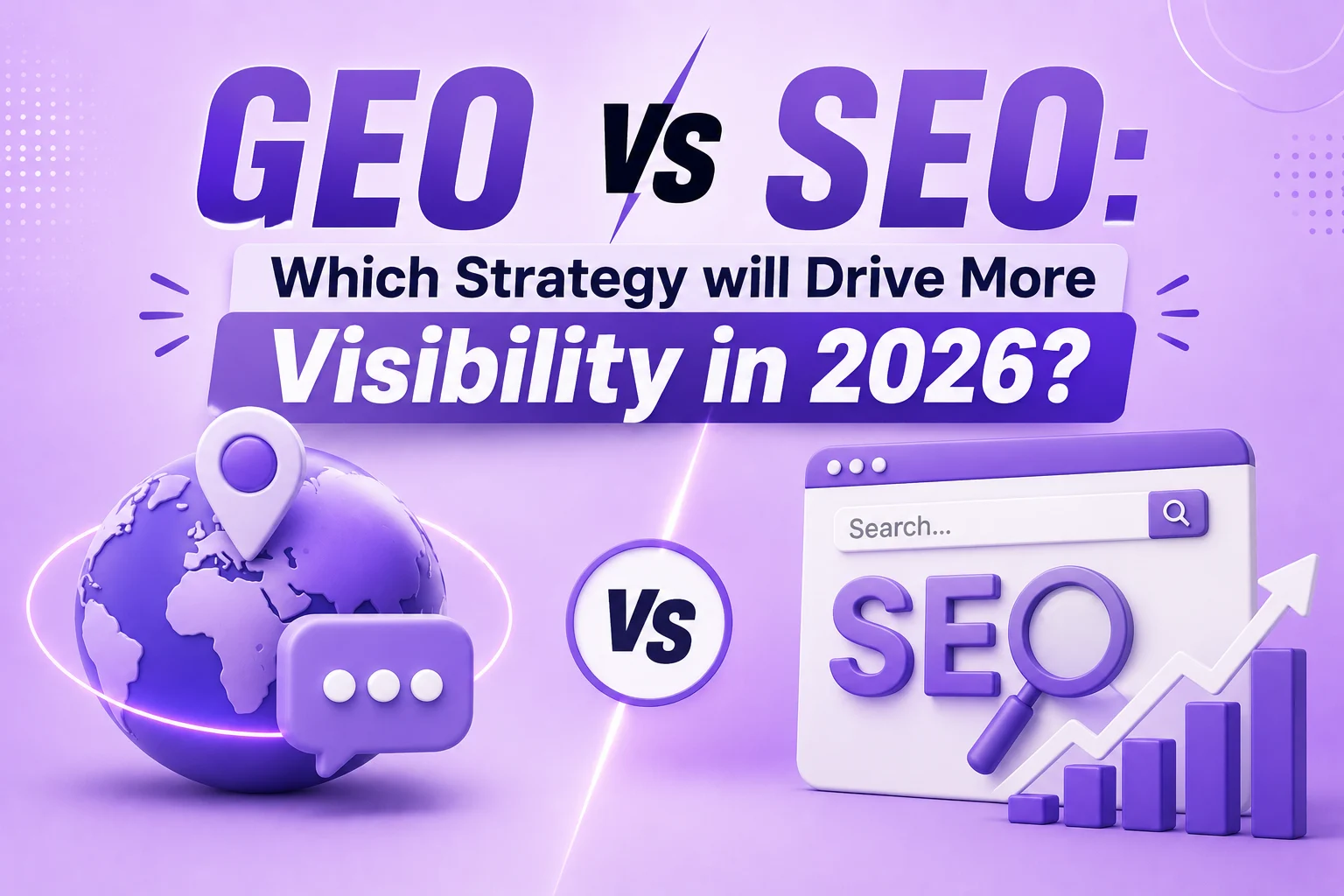
Now there are two streams of Search. First stream leads the user to a page with blue links, whereas the second stream will provide them with answers, even without taking them away from the search results page. This has made GEO vs. SEO one of the most important queries for content teams moving into 2026.
Both these types of searches have not lost their charm. SEO is the factor that controls who gets listed on the organic listings, Local Pack, and Shopping. On the other hand, Generative Engine Optimization influences who gets referenced or mentioned in AI answers by Google AI Mode, ChatGPT, and Perplexity.
What is SEO?
Search Engine Optimzation is the methodology where a website is built in such a manner that it will get ranked high in traditional search engines. It involves a solid base, keyword placement, backlinks, and an overall good user experience. It will get the pages to load fast, mobile friendly, having backlinks and created as per the user’s query.
This field of SEO has become even more complex. The core algorithm of google has changed so much that there is no filter for helpfulness now in the changes that happen, but there are helpfulness signals in every change. Pages which are of no help will get filtered off quite effectively.
What is GEO?
Generative Engine Optimization (GEO) is a relatively recent approach which is totally different from what was happening before. In GEO, it does not matter how high is the ranking, but whether this will be mentioned in an AI answer or not. Here is how AI works: it finds the information on the Internet, gathers the facts, creates the composition and cites some of the sources. So, for SEO, it is a task to be done, and you should be one of the sources.
It promotes clearness and preciseness. In case the paragraph begins with an explanation or definition or an exact statistical fact or even a comparative structure, AI will cite only the information provided at the beginning of the paragraph. Confused long paragraphs will not be able to meet the demands.
GEO vs SEO: What’s the Difference?
The clearest way to see the differences is to line them up across the factors that matter most to a content team.
Factor | Search Engine Optimization | Generative Engine Optimization |
Purpose | Rank a page in organic search results | Get cited or quoted in an AI-generated answer |
Content focus | Keyword relevance and search intent match | Clarity, quotability, and factual precision |
Visibility outcome | A clickable listing among several results | A direct mention inside one written answer |
Ranking process | Crawling, indexing, and algorithmic scoring | Retrieval and summarization by a language model |
Optimization methods | Backlinks, site speed, on-page keywords | Structured answers, clear sourcing, defined entities |
Measurement | Rankings, organic traffic, click-through rate | Citation frequency, brand mentions, referral trickle |
Why Search Engine Optimization is Important for Search Visibility
Even those searches that incorporate location and/or transactional aspects remain important and will need to make use of the traditional search approach.
1. SEO Ranking Factors: Links, page speed, mobile responsiveness, and reputation over time will continue to be essential SEO ranking factors.
2. Buyer Intent: People searching with the intent to buy using search engines would continue to visit actual web pages prior to purchase decisions.
3. Location-based Searches: Local companies would continue to depend on Google Maps, reviews, and location-based webpages, which AI-powered chat responses cannot replace.
4. Website: In the long run, search engines would not be impressed if you have an abundance of websites that appear at once but wouldn’t appear for many years in the future.
When Does GEO Work Better than SEO?
The research process for people will be changed due to AI before the visit itself.
- Direct answers: Due to AI overviews and AI mode from Google, the answers have become direct quotes from the source material; now it’s all about precision rather than keywords.
- Zero clicks: If the answer to a query satisfies the searcher in the chat window, then the citation in the chat window will never be followed by an actual visit.
- Sources’ trustworthiness: In favor of trustworthy AI models are sources with solid knowledge, identifiable authors and periodic publication in the field.
- Answer formatting: Question-and-answer formatting of the content, with the key fact being presented first is preferable to get featured in AI overviews.
How to Combine GEO and SEO in Content
With a bit of tweaking, a single piece of content can be used for both purposes.
1. Structure Update: Section your pages with descriptive headings to make it easier for crawlers and AI to determine where the right answer is to be found.
2. Statistics: Include statistics, dates and sources in the paragraph structure; AI will be much more likely to pull from examples rather than just statements.
3. Watch Both: Check not only keyword placement but also citations in AI Overviews, ChatGPT and Perplexity, as they each have their own visibility criteria.
4. Keep Experimenting: Publish and test posts performance in traditional search versus AI search results, making structural changes as you go along.
Conclusion
This is not even an issue of “which is better”; it’s an issue of coming to terms with the fact that there are now two kinds of visibility. The first type of visibility can be seen by one person, and the second type of visibility can be seen by two people. Answer first the one asking the question, and then write in such a way that crawlers and language models can understand; your visibility will naturally follow.
Frequently Asked Questions
Not at all. Although answers from artificial intelligence have provided yet another means of visibility, organic search remains the one yielding the highest number of clicks to websites, mostly during commercial and local searches.
State your response to the point right at the start of each segment and substantiate your statements with relevant data/references, and organize the text accordingly. It happens to be normal practice for AI to quote passages that say something directly instead of leaving room between the sentences.
Not entirely, although it will decrease clicks on certain types of informational searches since people receive their answer and do not have to go through to a website at all. On the other hand, traffic will keep coming via transactional, local, and review searches.
None of these can be used to replace each other. SEO is responsible for generating most of the traffic on any website whereas GEO will determine whether or not you are being cited in AI response. So nobody is better than the other.
No they are not exactly the same. While rankings in general are determined heavily by backlinks and the page authority, AI ranks focus heavily on the clarity of information and ease of citation.



Leave a Reply