
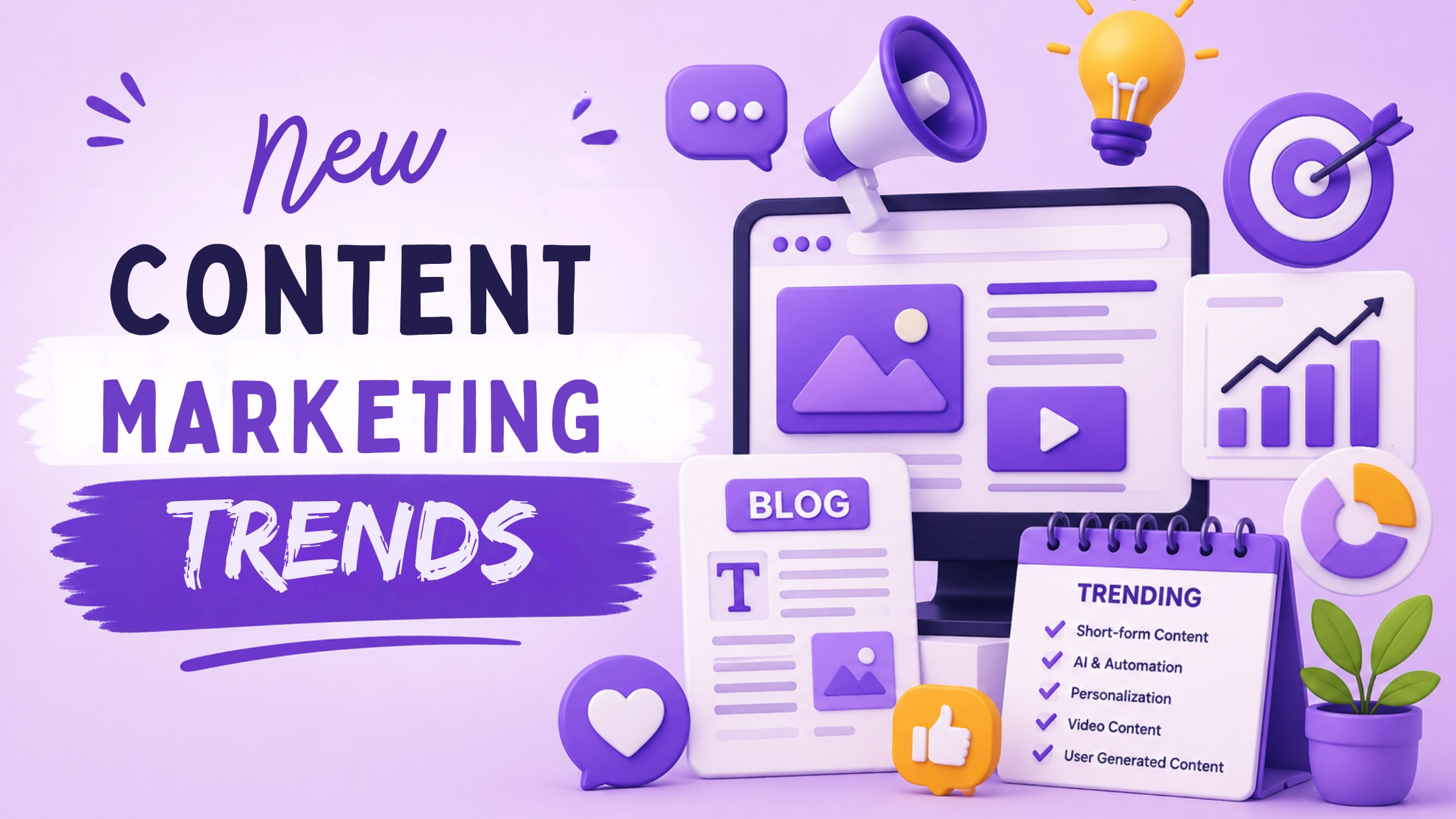
The majority of content teams are busier than ever, releasing better content, writing better, and planning better. But the outcomes are not commensurable with the work. The brands that will listen to the appropriate content marketing trends have already figured out what most teams have not. Something has changed unobtrusively. Searching, scrolling, and making decisions have become different, and the previous content playbook does not work in the same way anymore. Now, it is not enough to appear.
The good news? You do not require a larger staff and a larger budget. You only have to know where to concentrate. This blog will help you understand what is working currently, what is going away, and what your content strategy must look like if you want any actual results this year.
What's Changing in Content Marketing
Search is no longer a list of links. An increasing portion of your audience can now find answers to their questions directly provided by AI tools without having to navigate to any site. Social media feeds are less accessible without the need to pay to be seen. And readers have come to sincerely discriminate as to what they devote their time to.
It is not the newest platform or format that the content marketing trends will be about. They are concerning getting used to a world where relatability, usefulness, and trust are much more important than how many posts you post.
Key shift: Those brands that continue to gauge success based on volume of output will suffer. Instead of quantity, quality and relevance will always prevail.
Check This Blog – How artificial intelligence ai impacts local seo services ?
How Content Marketing Automation is Reshaping Content Teams
In the past, having tools to automate some of the content work provided you with an advantage. It is now only the norm. You are wasting time that would be much better spent elsewhere if your team continues to do all this manually.
Content marketing automation merely refers to the use of software to deal with repetitive and low-level activities, allowing your team to concentrate on the activities that require a human. That includes:
- Developing content strategies using live search information.
- Working out first drafts, which your writers refine and develop.
- Posting content in channels without manually posting.
- Monitoring the activities that are successful and automatically reporting.
Important distinction: Robotization, which eliminates the thought process of humans, generates unimaginative material. When the automation assists human thinking, it is more effective in creating better content in a shorter time frame. The distinction is all in the use thereof.
Why Personalized Content Marketing Is No Longer Optional
The majority of brands believe that they are engaging in personalized content marketing. Most are not. Including a person’s first name in an email or displaying a different picture depending on the job position is not personalization. Such simple sorting.
The real personalized marketing entails presenting the correct content, at the correct level of detail, to the correct individual, at the correct time. In plain terms:
- The same article should not be displayed to a business owner who compares prices with the one that was shown to a first-time visitor.
- A visitor to your pricing page four times this week does not require a beginner’s guide.
- A top executive and a junior employee working on your product require different content.
Brands that engage in treating their material as a living, breathing resource will continue to expand. Those who treat it as a fixed archive will continue receiving traffic and leave it unchanged into something of use.
Why Short-Form Video is a Must for B2B Content Marketing
Short videos long seemed like a consumer product, not a serious B2B item. To lifestyle brands and food bloggers, are not a serious B2B, this way of thinking is no longer true. These are actual media where business consumers spend time, such as LinkedIn short videos and YouTube Shorts, before reading a single article.
This is affirmed by the content marketing trends. Even the most technical of buyers will watch a short video prior to committing to a long reading.
Practical tip: When you are unable to give the answer to what will make your product worthwhile within less than 60 seconds, then it becomes a situational issue to be corrected. Make a short video, and it gains the reader’s trust and time to read the more in-depth content.
How Building Topical Authority Has Replaced Chasing Keywords
The updates made by Google and the emergence of AI-based search have conveyed the same message: it is no longer a matter of being ranked well due to repeating a keyword on a page. It is all about being truly familiar with what you are talking about and demonstrating it with the richness of your content.
The future of content marketing is in brands that possess a topic, rather than a keyword. Having a topic is about creating a supporting structure of content items. A central guide, articles, practical examples, and helpful tools that, combined, demonstrate to your audience, as well as search engines, that you are indeed knowledgeable about what you are discussing.
A brand that has 40 highly interrelated articles on a single topic will always beat a brand that posts 200 pieces that are scattered.
- Volume loses to depth in the current search world.
- Related content will also retain readers longer on your site, as this will be interpreted as quality by search engines.
To see a useful example of how to develop this type of connected content structure, one can turn to such agencies as Nextbigbox, which specialize in online strategy.
How Should Brands Prepare for the Future of Content Marketing in an AI World?
The small tracking files that were used to help marketers know who was reading their content are virtually dead (third-party cookies). The information that once came automatically now needs to be won straight out of your audience.
First-party data is the future of content marketing. Simply put, that is information that is provided by your audience:
- Your subscribers to the email list and newsletter.
- Individuals who complete a form to get a free guide.
- Regular community members who interact with your brand.
- The visitors of the websites whose behaviors on the site inform you of what they want.
Why this matters: When you are creating good content such that people are willing to have it in their inbox, you are creating something that no algorithm update will be able to strip away.
Why Zero-Click Content is a Strategy
A portion of your audience will never click through to your site in a search result or social post. The artificial intelligence of Google, social media feeds, and other sites are designed to retain individuals on their respective websites. It is not realistic to fight.
Zero-click content involves creating content that fulfills the value of itself where it is shown: in a social post, a search result, or an answer generated by an AI. The reader might not go to your site that day, but they are exposed to your name, they can think like you, and when it counts, they will remember you.
Regularly done, this creates the type of familiarity that will convert a passive reader into a customer in the future.
Conclusion
The brands that will win are not the ones publishing the most. They are the ones who know their audience well, use automation to work efficiently, invest in personalized content marketing that feels timely and relevant, and build real depth on the topics they own. For more on building a content strategy that holds up, Nextbigbox covers digital strategy and content frameworks worth exploring.
Frequently Asked Questions
This year's trends include topical authority, short-form video, zero-click content, first-party data, and personalization.
It can manage scheduling, drafting and reporting - giving teams more time to focus on creative tasks.
Mass-produced content doesn't work. Targeted marketing is key to engagement and revenue.
Companies need to focus on first-party data, topical expertise and producing content that audiences trust directly.
Through niche deep dives, intelligent automation and continuously publishing relevant, targeted content.



Leave a Reply