
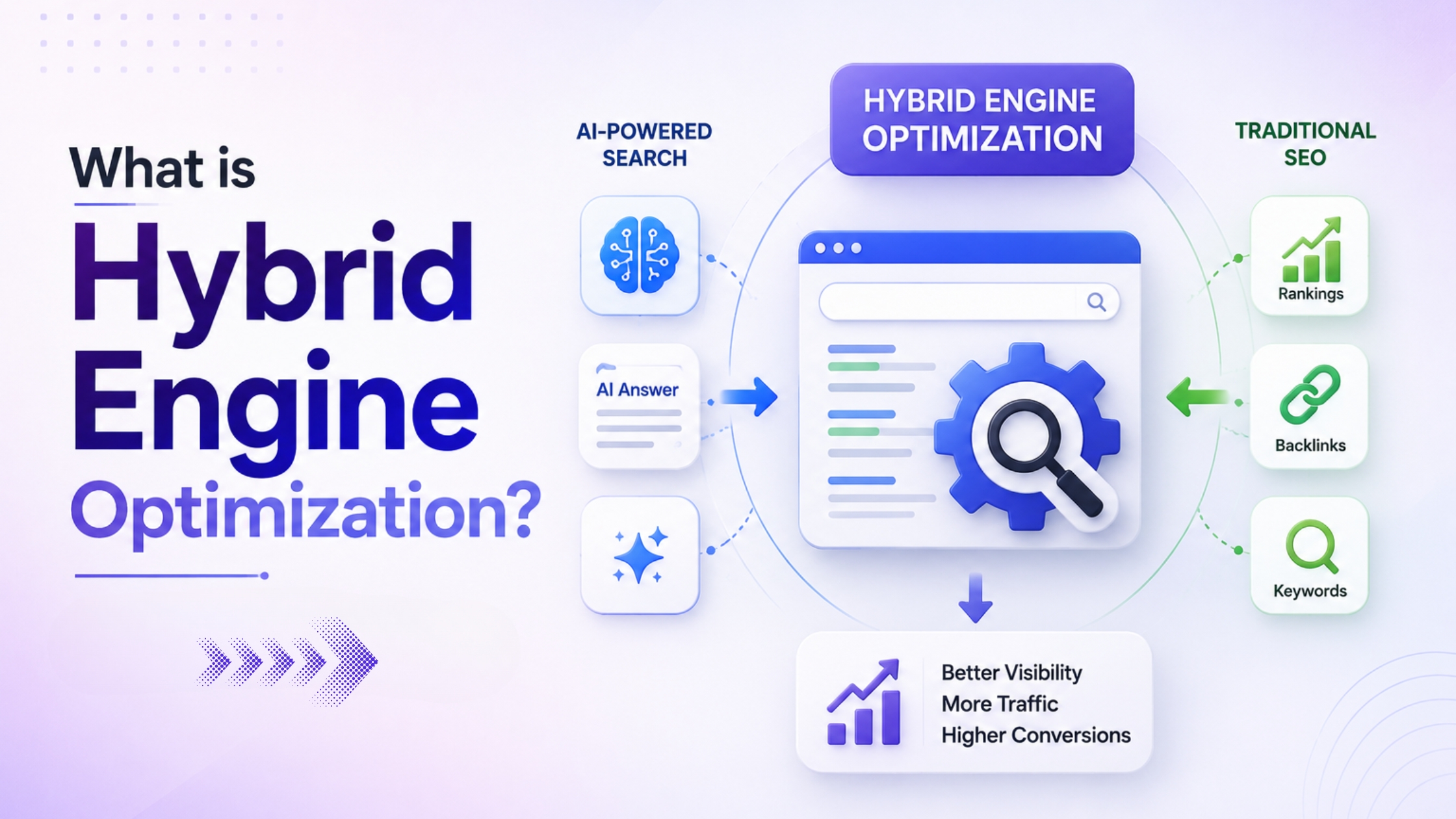
Have you ever thought that your searching style has changed? Earlier, you used to search on Google, but now you ask ChatGPT or any other AI tool. The same applies to your target audience. Because Hybrid Engine Optimization has made it easier to get answers directly without making you visit websites.
This is not just about websites, but more about the content. In practical terms, HEO means creating content that is structured, trustworthy, and clear enough to get picked up by every type of discovery system running today. One piece of content, multiple points of visibility.
Why is Hybrid Engine Optimization(HEO) so Popular?
Someone searches for your topic and clicks nothing, and then asks ChatGPT the same question and provides a direct answer from your competitor. You ranked. They got found. This is where Hybrid Engine Optimization comes in.
HEO is about the way content is organized and positioned to be found by all of the modern discovery tools, not just search. There are distinct rules for Google, AI Chat tools, voice search, and generative preview. With HEO, your content is fluent in all of them.
Why is Google Ranking Not Enough Anymore?
Traditional SEO was built for a search environment dominated by ten blue links. You have done keyword research, acquired backlinks, developed page authority and improved your rank in search engines. That system continues to be in effect. The issue is that it’s not the only system anymore.
Now your audience can get information in five ways before deciding. They Google it, ask an AI tool, check a voice assistant, read a generative summary and sometimes all of this in five minutes. Without a strategy that encompasses all other touchpoints, no other one will be covered.
This is the main premise of Hybrid Engine Optimization vs Traditional SEO. It’s not like traditional SEO didn’t work. It’s when search became greater than SEO was built for.
HEO vs SEO: Key Differences
Traditional SEO built the road. Hybrid Engine Optimization vs Traditional SEO shows you where that road now needs to go.
Factor | Traditional SEO | Hybrid Engine Optimization |
Main Target | Google rankings | Search + AI + voice engines |
Content Style | Keyword-focused pages | Structured, answer-ready content |
Success Metric | Page position | Visibility across all platforms |
Core Priority | Backlinks and authority | Depth, trust, and clarity |
User Intent | Match a search query | Answer the full question |
Structured Data | Useful | Essential |
What Are AEO, GEO, and AIO?
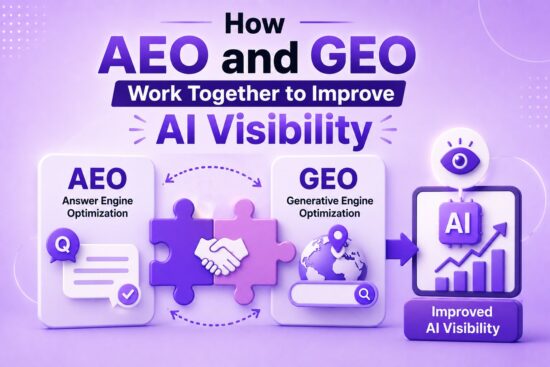
AEO, GEO, and AIO: HEO builds on three disciplines of optimization, working together. All of them focus on various facets of the modern search landscape. If you don’t follow any one of them, you have visibility gaps.
1. Answer Engine Optimization (AEO)?
What It Is – AEO aims to ensure your content is chosen as an answer to questions such as those posed by ChatGPT, Perplexity, or Google’s featured snippets. It’s the ability to write in a way that AI can easily and accurately generate a response from your page without getting confused.
Why It Matters – If a person asks an AI tool a question, that tool retrieves content that it can quickly understand. Vague, bloated or poorly structured pages are not selected. Well-structured content does.
2. Generative Engine Optimization (GEO)?
What It Is – The goal of GEO is to make sure your content is referenced in AI-driven answers. If an AI drafts a summary, comparison or recommendation, it cites sources. The GEO team ensures that your content is one of them on a regular basis.
Why It Matters – The new backlink is being cited in an AI answer. It enhances the brand visibility in areas where your audience is spending more and more time each month. It won’t be cited if it’s not cite-worthy.
3. AI Overviews Optimization (AIO)?
What It Is – AIO aims at Google’s AI-powered summaries that get listed at the top of the search pages, right on top of organic search results. These summaries are scraped from content that Google deems trustworthy, clear, and well-structured.
Why It Matters – Being on page one doesn’t necessarily mean you’ll get noticed if Google’s AI Overview provides an answer to the question from someone else. AIO ensures your content.
AEO, GEO, and AIO – all in one: AEO combines all three while maintaining your established search performance. This is how it is not a limited solution for one channel but a full solution.
What Makes the Best Content Ready for HEO?
It takes more than good writing to get your content to work on all of these systems. There is a need for a clear structure and deliberate choices.
1. Lead With Clarity – State the answer at the beginning of your page. AI algorithms prefer pages where the information can be found immediately without having to scroll.
2. Extend beyond Keywords – Give full coverage of the topic. Those pages with artificial intelligence algorithms are looking for content, not keyword-stuffed pages.
3. Schema can be applied to Add Schema Markup – FAQs, How-To’s, and Articles. This will help the search engine and/or AI algorithm understand exactly what is on your pages.
4. Match Real Questions – Questions that ask from AI tools are written as a person would ask their friend. This is why it’s essential that your content reflects this style.
5. Show Your Expertise – Support your responses with information and give credit to your sources. AI algorithms are inclined to cite authoritative, accurate information.
How to know if your HEO strategy is working?
If a page is ranked at the #3 position on Google and it never appears in an AI answer, it is not doing well in comparison with what it can do. It’s not just rankings that content teams have to monitor these days. Follow these measures to see the complete picture:
1. AI citation frequency: How many times does your content come up within ChatGPT or other tools, such as Perplexity, when your main topics are being searched?
2. Content being included in Google AI Overview: If your content is being displayed in the AI-generated summaries at the top of relevant search results, that’s a plus.
3. Voice search: Do voice assistants read your answers to customers asking about your business?
4. Ownership of featured snippets: Do you have the ownership of the top answer boxes on the most critical of your search queries? Traditional ranking matters, but no longer as much as other rankings.
Conclusion
Hybrid Engine Optimization is the natural next step for anyone serious about content visibility. It does not throw out what worked before. It builds on it and takes it further, into AI chat tools, voice results, generative previews, and every other place your audience is now looking for answers. The brands that will win are the ones that stop optimizing for a single algorithm and start creating content that earns trust everywhere. That is what HEO is built for.
Frequently Asked Questions
It is a strategy that helps your content appear across Google, AI tools, and voice search simultaneously.
Regular SEO targets Google rankings only. HEO makes your content visible across every modern search platform.
Yes. Good Google rankings do not guarantee visibility in AI tools, voice search, or generative summaries.
Each targets a different discovery system. Together, they cover every place your audience searches for answers.
Start by structuring content clearly, adding schema markup, and writing direct answers to real user questions.



Leave a Reply