
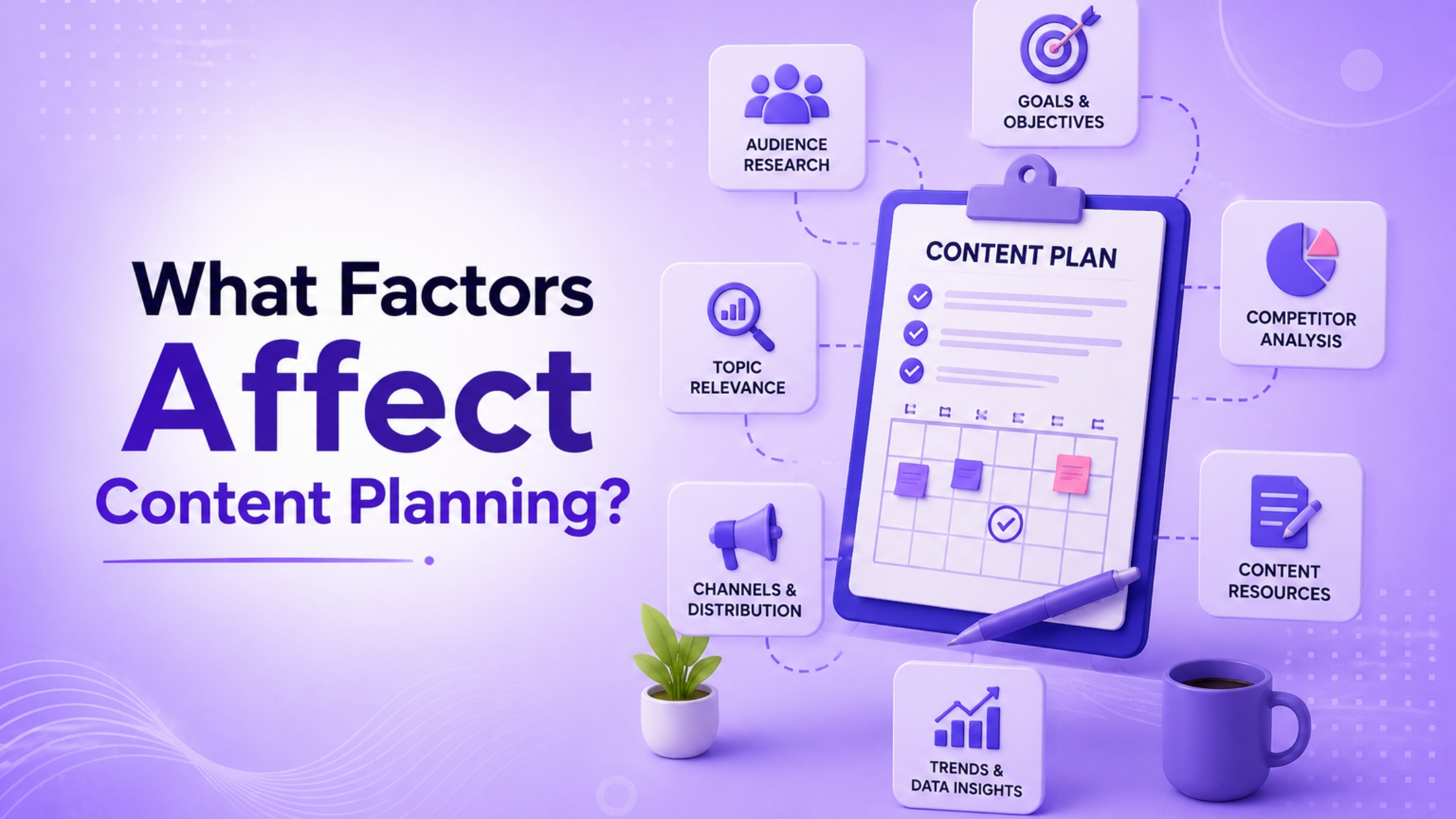
You must have made a content plan by strategising, and it looked great until. But it still did not work. It happens. You had the ideas and schedule. But something was off, and the post did not perform well. A solid plan is made with factors affects content planning that most people overlook. Good content does need time and patience.
Understanding these underlying factors is what separates content that simply exists from content that actually performs. Once you start paying attention to them, your strategy becomes less about guesswork and more about intentional, results-driven planning.
Why Your Target Audience is the Top Factor in Content Planning?
Here’s what strong audience research looks like. Before you begin writing, you need to ask: Who am I writing this for? I know this sounds obvious, but most of the brands skip this and jump straight to topics. This is where things go wrong. Your audience changes over time. Their preferences, problems and questions change over time. The problem they had six months ago might not be the same today.
This is why you need to do strong audience research:
- Who are they? – Age, job, interests, and daily habits.
- What are they searching for? – Check Google search results with keywords
- What sort of problems do they have? – Search for common related queries
- How do they like to read? – Blogs, short or long, paragraphs or pointers
When your content calendar planning is built on real audience data, every piece you create has a purpose. Without it, you’re just guessing.
You can read more here – Content Marketing Trends to Follow in 2026
How Business Goals Shape Your Content Strategy Development?
If the content is not relatable to your business goal, then it is just a waste. Before you plan on anything, try to be clear on what you want your content to do. Your goals should be set according to the types of content you need:
For example:
- Brand Awareness – Write blog posts, social media content, or create videos that introduce your brand to new people.
- Lead Generation – How-To guides, checklists, service pages, and landing pages that get people to sign up or reach out for your services.
- Search Rankings – Use keyword-focused articles that help answer specific questions.
- Customer Retention – It is the helpful guides that keep the existing customers happy.
Your content strategy development process must start with these goals. If you skip any of these, then you will create content that will not work. Set your goals first. Then plan your content around them.
How SEO and Keyword Research Influence Content Calendar Planning?
No matter whether you have a great topic idea. But if nobody is searching for it, then it will have zero traffic. This is where SEO (Search Engine Optimisation) comes in for help. It helps you in understanding what people are searching for right now, whether the blog ranks on the specific topic, and what type of content on Google is currently showing for that topic.
Keyword research is one of the most powerful factors affects content planning because it connects your content to real demand.
Here’s a simple way to use it:
1. Pick a topic you want to write about
2. Search for related keywords using free tools like Google Search or Keyword Planner
3. Check what kind of articles are already ranking
4. Plan your content to be more helpful and detailed than what’s already out there
Why Content Distribution Channels are a Key Factor in Content Planning?
The platform where you share your content matters just as much as what you write. The same content on all platforms does not work. You need to plan your content according to the platform you will be posting on. Ask yourself:
- Where does my audience spend time? Google, Instagram, LinkedIn, YouTube?
- What format works on that platform? Short posts, long articles, videos, or infographics?
- How will I get people to see it? Organic search, social media, email newsletter, or paid ads?
Together, these are some of the most overlooked factors affects content planning, especially for brands that want to grow their audience over time.
Conclusion
Now you might have understood the importance of content planning. Do not ignore your business goal. Do the keyword research, check the target audience. When you take all these factors seriously, then your content calendar planning starts working in the right direction. It becomes a system that produces content your audience actually wants to read. Do all of that, and your content plan will hold up, week after week.
Frequently Asked Questions
The main factors include your target audience, business goals, SEO and keyword research, team resources, content distribution channels, and competitor activity. Each one plays a different role in shaping what you create, when you publish, and how your content performs.
It starts with clarity on two things: who you're writing for and what you want to achieve. Once those are clear, you can choose the right topics, formats, and publishing schedule to support your goals.
A content calendar keeps your team organised, ensures you publish consistently, and helps you plan ahead for seasonal topics or campaigns. Without it, content creation becomes reactive and scattered, which leads to poor results.
At least once every quarter. Audience behaviour, search trends, and business priorities shift regularly. A plan that made sense in January may need updates by March to stay effective and relevant.
Absolutely. The key is to focus on quality over quantity. A small team that publishes one or two well-researched, helpful articles per week will outperform a bigger team that rushes out daily content with no real strategy behind it.





Leave a Reply