
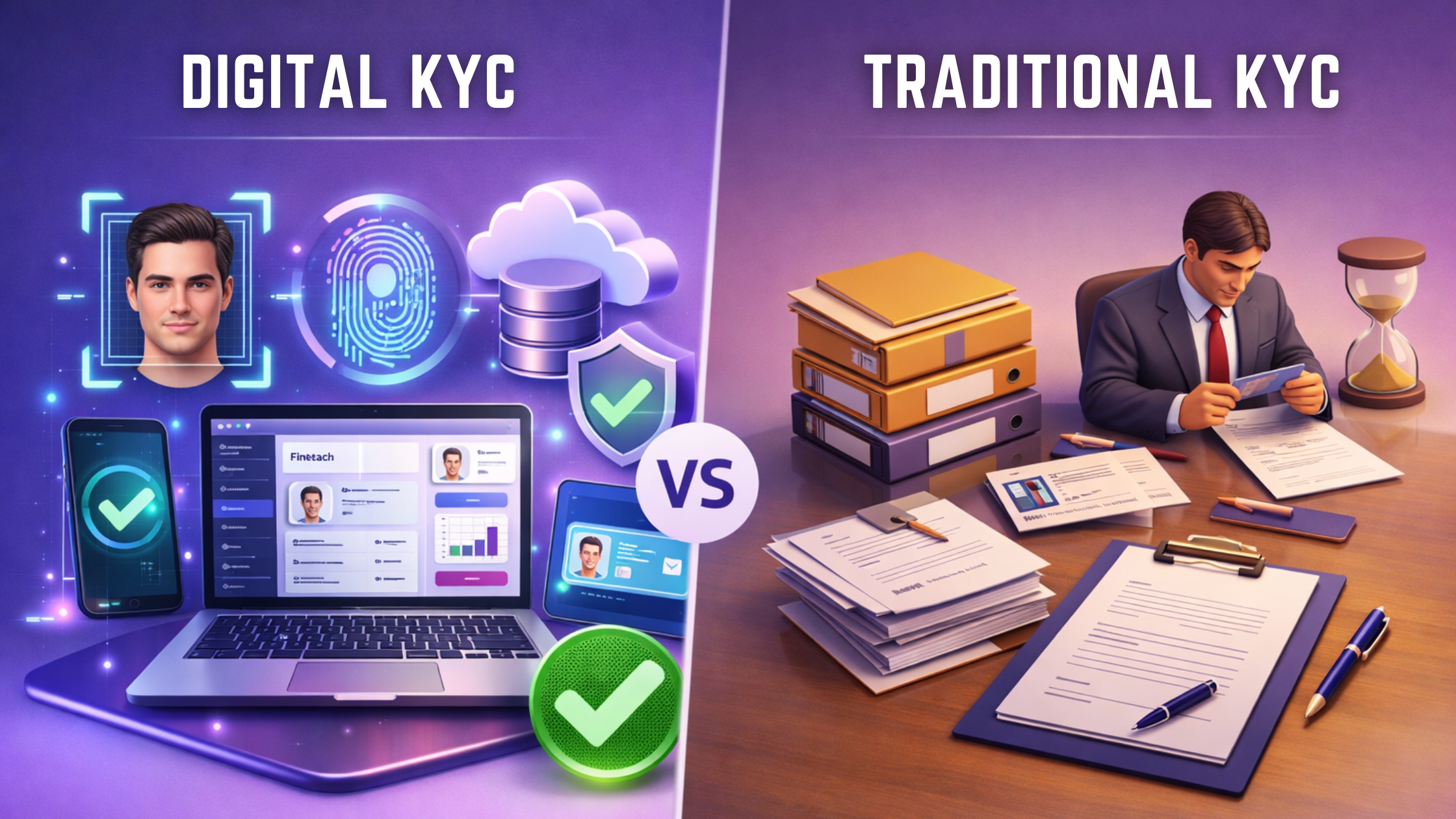
The process of opening a bank account used to be all about waiting in line holding the folder containing the documents. Nowadays, it only takes a matter of minutes on your phone. The point that change leads to an important question which is what actually raises an important question such as Digital KYC vs Traditional KYC. Convenience is not the only reason behind this change. It is speed, security, compliance, cost and the way businesses develop trust with the customers during the very first contact. Physical verification is still in use by some firms. Still others have gone completely online. Many are caught in between.
Each method has its own benefits and challenges. If you are planning to improve your onboarding process, it is important to clearly understand the differences between these two approaches so you can choose the one that fits your business needs and customer expectations.
What is Traditional KYC ?
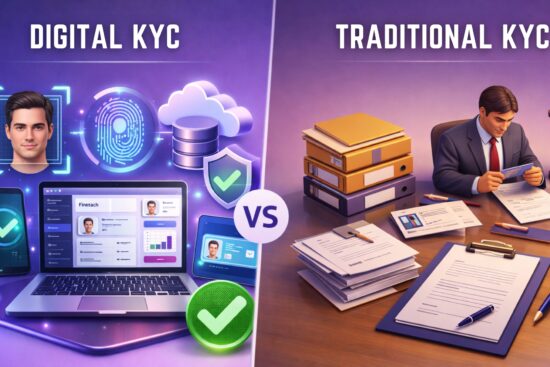
Traditional KYC is the basic process banks and financial institutions use to check who you are before offering services. It simply refers to the submission of documents such as ID proof and address proof by physically visiting the banks or institutions. You have to visit the branch, fill the forms, give a passport-size photograph and sign on the form. Then one of the bank employees checks your documents manually and records them. It is done to avoid fraud and to make sure that the institution does not violate the legal regulations. But, it will require several days to be finished and can require several visits in case if some documents are missing or wrong.
What is Digital KYC ?
Digital KYC is an online method to verify the identity of a customer without visiting a branch. You do not need to hand in hard copies. All you have to do is use a mobile application or a website to do KYC. OTP authentication, Aadhaar authentication, video KYC, or biometric authentication is used to verify your details. A reliable digital kyc solution in India connects securely with official databases to confirm your identity in real time. All that has to be done is at home through a laptop or smartphone. It is quicker, more convenient and less paperwork is involved even though it satisfies regulatory requirements by authorities.
Digital KYC vs Traditional KYC: Which is Better?
When comparing the methods of onboarding, you need to check the differences clearly. You will notice that digital e-kyc service has transformed the verification and more paper-based process.
Basis of Comparison | Digital KYC | Traditional KYC |
Process Type | Online identity verification | Physical document verification |
Customer Presence | Remote verification allowed | Physical visit required |
Documents | Uploaded digitally | Submitted as photocopies |
Time Taken | Completed in minutes or hours | Takes days or sometimes weeks |
Cost | Lower operational cost | Higher cost due to manpower and paperwork |
Data Entry | Automated system-based entry | Manual data entry by staff |
Error Chances | Fewer errors due to automation | Higher risk of human errors |
Record Storage | Stored securely in digital format | Stored as physical files |
Scalability | Easy to scale for large volumes | Limited by branch capacity |
Customer Convenience | High, can be done from home | Moderate to low, requires branch visit |
How to Choose the Right KYC Service for Your Business
The selection of verification model should be determined by your objectives, clients and regulatory requirements. Consider the following before making a decision:
1. Volume and Growth Plans Onboarding
In case your business receives a lot of applications per day, it is important to know and compare about Digital KYC vs Traditional KYC. Onboarding a large number of customers is more effectively performed by digital systems than it is in a manual process, which can become slow with scale.
2. Technology Infrastructure
The implementation of a reputable digital kyc system in india demands the use of secure systems, API connections, and security of information. Make sure that you have the technical arrangement that will easily accommodate the digital check.
3. Customer Demographics
Remote onboarding is more acceptable to tech-savvy users. Nevertheless, physical verification can be used by customers who have limited or no access to the internet in the area.
4. Regulatory Compliance
Always align your KYC process with RBI or industry-specific regulations. If you are implementing a digital kyc solution in India, ensure it is fully compliant with current guidelines to avoid penalties, legal issues, or operational disruptions.
5. Budget and Cost Structure
Conventional KYC is associated with repetitive costs of operation. Digital systems can have initial investment costs but will save on cost in the long run.
6. Risk Assessment Strategy
Despite your primary onboarding being digital, it is possible that high-risk customers or large-value accounts will need extra checks.
Why Choose NextBigBox for Digital KYC?
Choosing the appropriate digital e-kyc service partner directly affects your speed of onboarding, the confidence of compliance, and the trust of the customers. NextBigBox provides a systematic and operational solution to the verification of digital identities, and the companies simplify the compliance process, enhancing efficiency of the operations. Their solutions are meant to help it grow without introducing any unnecessary complexity.
Key Advantages:
- Indian-compliant regulatory-appropriate systems
- Fast and easy integration with other platforms
- Infrastructure capable of growing customer volumes
- High levels of data security and encrypted storage
- Reactive technical and compliance support group
- Video KYC, document verification and biometric checks are supported
Conclusion
Choosing the right verification method depends on your business goals, customer expectations, and compliance needs. A reliable digital kyc solution in india can simplify onboarding, reduce costs, and improve accuracy. By understanding both approaches clearly, you can build a system that supports growth while maintaining trust and regulatory confidence.
Frequently Asked Questions
Digital KYC is completed online using electronic documents and authentication methods, while Traditional KYC requires physical documents and in-person verification at a branch.
Yes, Digital KYC is legally valid when conducted according to RBI and government guidelines through approved verification methods.
Digital KYC can be completed within minutes if documents are correct, whereas Traditional KYC may take several days due to manual checks.
When implemented with proper security measures like encryption and biometric verification, Digital KYC is considered secure and reliable.
Yes, many organizations use a hybrid approach, starting with digital verification and conducting physical checks only for high-risk or flagged cases.


Leave a Reply