
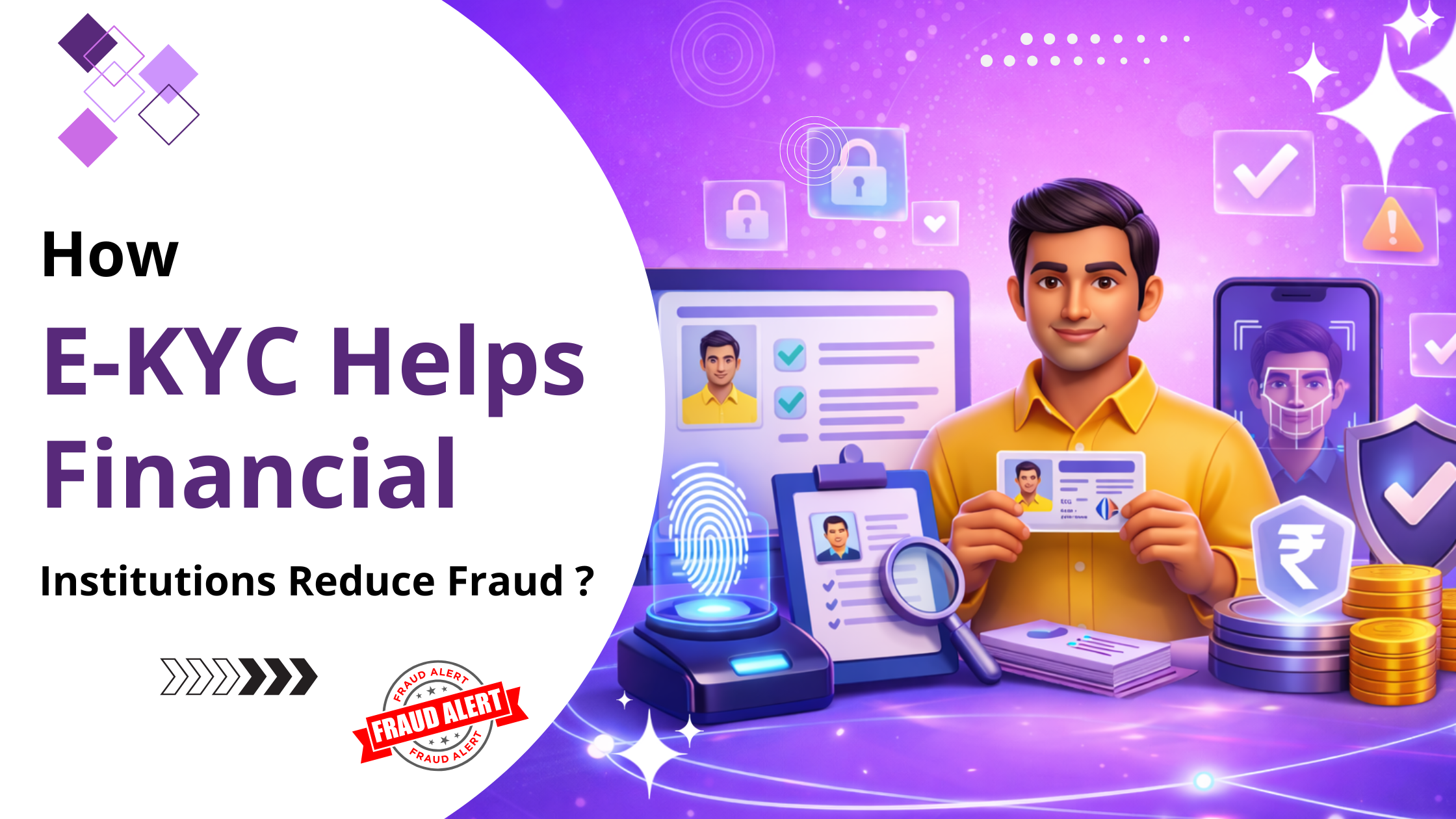
Financial fraud has increased since banking services can be operated online. Because of this, the financial institutions must do verification of their customers quickly while still securing their systems. The older verification methods use a longer duration and do not work as fast for digital transactions. Understanding How E-KYC Helps Financial Institutions Reduce Fraud is important for banks, fintech companies, and payment providers that want to keep their platforms safe for customers.
Knowing about how it works, the types of fraud it helps prevent, and the role of e-KYC service in making the financial systems safer will help solve your problem. With the help of this, organizations can confirm identities in real time, spot suspicious activities beforehand and help follow regulatory rules more easily.
What is E-KYC and How Does it Work in Financial Institutions?
E-KYC is a digital process through which financial institutions verify the identity of customers. Instead of filling out paperwork physically and doing manual checks, the institutions verify identities using documents digitally and verification through biometrics. The purpose here is to confirm that the person opening or using an account is who they claim to be.
The role of E-kyc service is:
Component | Description |
Identity document verification | Validates government IDs such as passports, driver’s licenses, or national IDs |
Biometric authentication | Uses facial recognition or fingerprint verification |
Database cross-checking | Confirms information against official government or financial databases |
Real-time validation | Identity checks happen instantly during onboarding |
When implemented correctly, the system allows institutions to onboard customers quickly while reducing the risk of identity misuse.
Benefits of Using E-KYC in Financial Institutions
The financial institutions face threats such as identity theft, fake accounts, and digital scams. That is why understanding how e-kyc helps financial institutions reduce fraud explains why many banks now rely on digital identity verification.
1. Stronger Identity Verification – The E-KYC verifies the customer’s identity by checking the digital documents and personal information against trusted databases. This reduces the chances of criminals who are trying to open accounts with fake documents or stolen identities.
2. Biometric Authentication – Most of the E-KYC systems use facial recognition or test fingerprints to confirm that the person creating the account is real and present. This step helps in the detection of fraudsters from impersonating someone else.
3. Real-Time Identity Checks – E-KYC uses identity verification instantly during the account registration process. If any suspicious information appears, then the system immediately flags the account and stops any potential fraud before the account becomes active.
4. Detection of Duplicate or Fake Accounts – This system helps you compare new customer data with existing records to detect duplicate profiles. This role of e-kyc service prevents fraudsters from creating multiple accounts using slightly altered personal information.
5. Better Fraud Monitoring and Risk Detection – The advanced system of e-KYC helps analyze user behaviour, details of the device and location. These checks help the financial institutions to identify unusual activity patterns that might indicate fraud or suspicious transactions.
Common Types of Financial Fraud Institutions Face
Monetary institutions have had to deal with various forms of fraud that are targeted at identity check systems and online transactions. Knowledge of such risks is useful in enabling organizations to reinforce their security and save their customers from economic damage.
1. Identity Theft – Identity theft occurs when offenders use the personal data of another person to open bank accounts, take loans, or otherwise commit transactions at financial institutions without the owner of the information.
2. Account Takeover Fraud – The fraudsters use stolen logins to access an existing customer account in this form of fraud. When they get in, they steal money, switch account details, or carry out unauthorized transactions.
3. Synthetic Identity Fraud – Synthetic identity fraud is a type of fraud where criminals use legit and fabricated information to invent a new identity. The identities are frequently opened and used to conduct unlawful financial operations.
4. Money Laundering – Money laundering is the process of concealing the origin of the illicitly acquired funds by transferring the funds through various accounts or financial institutions to make the money look legal.
5. Fake Document Fraud – When registering an account, there are cases when fraudsters provide forged or falsified identity documents. Such documents can appear authentic but contain fake information to search around without being verified.
Top 5 Industries Using E-KYC for Identity Verification
Many industries rely on this to verify customer identities. The growing adoption of digital verification shows how E-KYC Helps Financial Institutions Reduce Fraud while helping organizations onboard customers faster and maintain strong security standards.
Industry | Use of E-KYC | Key Benefit |
Banking | Verifies customers before opening accounts or issuing loans | Prevents identity fraud |
Fintech | Confirms users for digital wallets and apps | Stops fake accounts |
Insurance | Verifies policyholders during signup and claims | Reduces fraudulent claims |
Investment Platforms | Confirms investor identities before trading | Ensures verified investors |
Payment Services | Verifies users before enabling transactions | Prevents money laundering |
Conclusion
Financial institutions exist in a world where security, compliance, and user convenience need to co-exist. Digital fraud cannot be dealt with using traditional verification methods, which are not enough to deal with threats. The role of e-kyc service is an effective solution. Digitalization of identity verification will enable financial institutions to onboard more quickly, authenticate more efficiently, and prevent fraud more effectively. Choose NextBigBox to have a trusted E-KYC solution that enhances identity checks, minimizes fraud, and streamlines the process of secure digital onboarding.
Frequently Asked Questions
E-KYC is an electronic customer identity verification process adopted by financial institutions and banks to authenticate customer identities over the Internet through the use of documents, biometrics, and database verifications.
E-KYC authenticates identity on-the-fly, identifies forged documentation, and stops fraudsters and criminals from creating accounts based on stolen or forged documents.
Yes. E-KYC systems have encryption, biometric verification and secure databases to guarantee safe and dependable identity verification.
E-KYC assists the financial intermediaries in minimizing the risk of fraud, accelerating the process of onboarding, enhancing compliance, and decreasing the manual verification expenses.
The E-KYC is implemented by industries like banking, fintech, insurance, investment platforms, and payment services to verify their customers and avoid identity fraud.





Leave a Reply